Eve Ensler
The Vagina MonologuesEve Ensler is a playwright and feminist whose work transformed private accounts of women’s bodies and lives into public testimony. The Vagina Monologues began in interviews rather than a settled plan; as Ensler performed the work, women responded with stories of their own, and the play became the basis for V-Day, a movement to end violence toward women. Her account links that public work to a personal history of bodily silence and to a method that gives women’s testimony a stage while acknowledging the shaping involved in turning interviews into theater.
Identity and Background
Ensler describes herself as a playwright and feminist, but says she had not imagined becoming a public figure associated with vaginas. She recalls the unexpected scale of that role: talking about the subject on television, leading a crowd in Baltimore in chanting the word, and performing the piece night after night. She did not regard these events as the result of a plan she had set for herself; in retrospect, she describes the play as having taken hold of her.
Her childhood helps explain the question of who gets to name and understand the female body that runs through her work. Although she was taught the names of many body parts, she never heard the word clitoris, and she says it took years to learn about its function. One area of the body remained unmentioned, leaving her without accurate or affirming language and exposed to shaming words and schoolyard jokes. That early gap also left room for the belief that men, whether lovers or physicians, knew more about women’s bodies than women themselves did.
Ensler identifies having been sexually and physically violated by her father as part of her background. The available account does not elaborate on the circumstances; it places this history among the reasons she later understood herself as a candidate to write the play. Her personal experience is therefore present without being made the sole explanation for the many women’s stories that the work gathers.
From Interviews to Theater
Before The Vagina Monologues, Ensler had spent years writing plays based on interviews. She began talking with women about their vaginas while she was working on what she considered her “real” play, and says the interviews became the monologues. The project was not initially outlined or consciously shaped as a complete play. She describes the process as informal and off the record, a beginning that contrasts with the public reach the work later achieved.
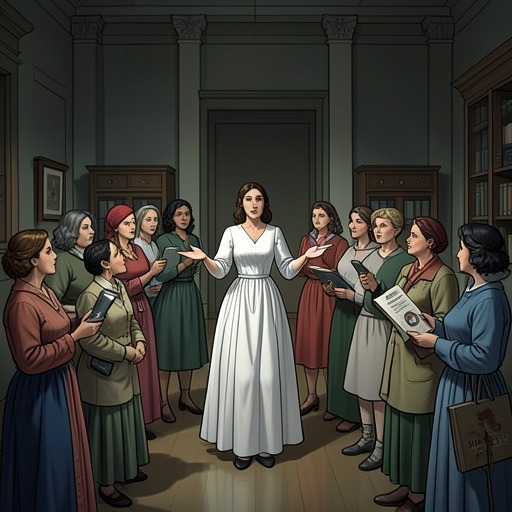
The interview process reached more than two hundred women. Ensler spoke with older and younger women, married and single women, lesbians, college professors, actors, corporate professionals, sex workers, African American women, and Hispanic women. The breadth of those conversations made the project a collection of varied accounts rather than a single speaker’s explanation of women’s experience. She also notes that the monologues do not all bear the same relation to their source material: some stay close to interviews, some combine accounts, and others develop from an interview’s initial seed. The work’s claim to testimony thus coexists with its openly acknowledged acts of selection and composition.
Ensler says she did not remember writing one piece and describes herself as having been taken by the Vagina Queens. Her partner, Ariel Orr Jordan, encouraged her to take the material seriously and helped her conceive the piece and make it. This relationship mattered at a turning point: a set of conversations begun alongside another play became a work with its own artistic direction.
Listening, Knowledge, and Performance
The work’s method answers the silence Ensler describes from childhood. In one account of a workshop, participants were asked to look at their vaginas with hand mirrors and report what they saw. Ensler says that before this exercise her understanding had rested on hearsay or invention, and that she had never really seen her own body in this way. The episode makes the distance between having a body and having knowledge of it concrete: an ordinary act of looking and speaking becomes a challenge to inherited ignorance.
That approach extends from the workshop to the stage and from the stage back to conversation. Ensler says that when she traveled with the piece, women often waited after performances to talk about their lives. She valued these exchanges, where people told stories, made suggestions, and communicated their responses. In her account, performance did not conclude the encounter; it opened a space in which audiences could answer the work in their own words. The movement between listening, theatrical form, and further testimony is central to the work’s public life.
Public Reach and V-Day
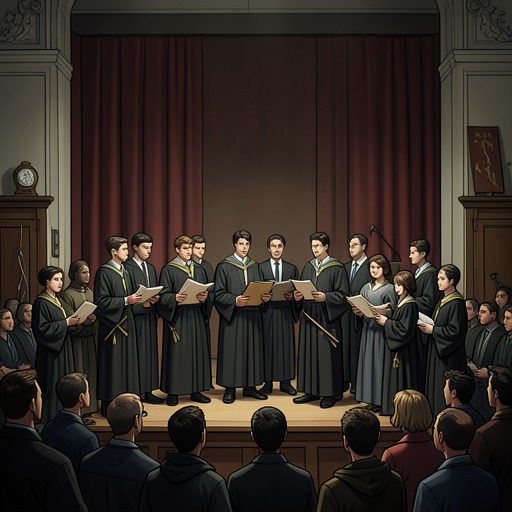
The Vagina Monologues drew on more than two hundred interviews and turned intimate narratives into poetry for the theater. Ensler’s first response to seeing the work performed was that its truth-telling belonged to a longer journey women had been undertaking. The play’s form therefore joined individual testimony to a shared public practice: what had been difficult to name in private could be spoken before an audience and met by other women’s accounts.
As Ensler carried the piece from city to city and country to country, hundreds of women waited after performances to tell her about their lives. She says the play had freed up memories. The consequence was not simply a wider audience for the production, but a recurring exchange in which the act of hearing one woman’s account encouraged others to speak. She also identifies the work as a way of bringing hidden experiences into the open, naming them, and turning rage into positive action intended to reduce and heal violence.
V-Day was born in 1998 as an outgrowth of The Vagina Monologues. Ensler describes it as an energy, a movement, and a catalyst for ending violence toward women. The connection gives the play a consequence beyond the theater: its touring and the conversations that followed performances helped make public testimony a basis for organized action. In Ensler’s account, the play and movement are linked but not identical—the stage work gathers and gives form to stories, while V-Day carries the impulse to oppose violence into a broader effort.
Narrative and Significance
Ensler’s role is both authorial and receptive. She brings experience as a playwright who works from interviews, but she also emphasizes that the project began without a comprehensive outline and that its materials came from women with different lives. Her descriptions of close, composite, and more freely developed monologues make clear that the theater does not simply reproduce every interview unchanged. The resulting work depends on listening and on artistic construction, while keeping the voices and experiences of its sources at the center.
Her account also places knowledge, language, and action in sequence. A childhood without accurate language leaves women vulnerable to shame and to the presumption that others know their bodies better than they do. Interviewing, looking, speaking, and performing offer ways to contest that presumption; the conversations after performances then show how one act of public speech can make room for another. Ensler’s significance in this narrative lies in that passage from silence to testimony and from testimony to collective action, with V-Day emerging from the work’s continuing encounters with women’s stories.